There is a rule in the GAA - the Gaelic Athletic Association - that sounds simpler than it is: you play for the county where you were born. No transfers. No moving to a wealthier club. No agents placing you elsewhere. If you were born in Kilkenny, you play for Kilkenny. If that is not enough, you do not play at all.
In an era where footballers change clubs for hundreds of millions, and basketball stars assemble their "superteams", hurling is an anachronism. A sport that refuses to embrace the modern sports economy. And that is precisely what makes it so extraordinarily beautiful.
"Even the most celebrated players - those who train like professionals and perform before 80,000 spectators - receive no salary. They play for pride, for their place, and for the love of the game."
- Ireland.ie on the GAAThis is not sentimental nostalgia. This is the foundation of a sport that last year sold out Croke Park - the third largest stadium in Europe - with 82,300 spectators. People who came to watch amateurs.
Black and Amber - What it means to be Kilkenny
To understand hurling, you must understand Kilkenny. A county in the southeast of Ireland, no larger than a Dutch province. No harbour city, no internationally renowned university town. Just: Kilkenny. With its cathedral, its River Nore, and its obsession with hurling.
And yet no county in the whole of Ireland has built such dominance in any team sport. In the first quarter of the 21st century, Kilkenny won eight All-Ireland titles. Seven times the best on the entire island. With players who simply went back to work the next day. As farmers, teachers, bank clerks.
That pride is not abstract. It has a face. And that face is called Henry Shefflin.
Henry Shefflin
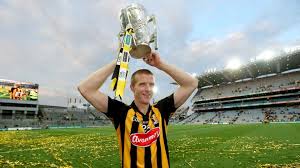
Henry Shefflin grew up in Ballyhale, a small village in County Kilkenny. His two older brothers already played for Kilkenny. His younger brother too. It was not a choice - it was who they were.
In 16 years as a senior player for Kilkenny, he won more All-Ireland titles than any other individual in the history of the sport. Ten. Not as part of an expensive superteambut as an amateur who built his career in financial services - and who, after hanging up the hurl, opened his own financial planning firm on the Freshford Road in Kilkenny.
They called him "King Henry" - a nickname he never wore easily. Because kings rule from above. Shefflin played alongside his teammates, for his county, for his village. That is the difference.
The Dynastic Era - Kilkenny's unprecedented run
Between 2006 and 2009, Kilkenny won four All-Ireland titles in a row. Four consecutive years as the best in the country. In the sporting annals of Ireland, this stands as one of the greatest achievements ever recorded. They attempted a fifth in 2010 - the so-called "Drive for Five" - but Tipperary halted that dream with a historic victory of 4-17 to 1-18.
The rivalry that developed between Kilkenny and Tipperary in that decade was not for sale. It was not manufactured by marketing agencies or competition formats. It grew organically, fuelled by the simple geographical proximity of two counties that have made hurling their very identity.
"The championship campaign has a unique rhythm in Ireland - a rhythm that draws the country together and sometimes divides it with equal passion."
- Ireland.ieIn that era, Shefflin was the star player, but he was never a soloist. Hurling is not a sport for individualists. Fifteen players on the field, the pace of the fastest team sport in the world, and a culture of collective honour. The county wins or loses - never the player alone.
Michael Kavanagh - The name behind the name
Not every legend wears a crown. Some legends stand in the shadow of the great names - not because they are lesser, but because hurling has fifteen positions and only one ball.
Michael Kavanagh was one of the cornerstones of the Kilkenny defence that laid the foundation for the dynastic years. As a defender from 1998 to 2012, he played 48 championship matches, won eight All-Ireland titles and four All-Star awards. In 2009 he was selected as one of the 125 greatest hurlers of all time.
Kavanagh played alongside his teammates for the honour of Kilkenny. His brother James also played hurling - and it is that same James you know as your hurling partner in Kilkenny. That is the beauty of this sport: the families who represent the same county for generations, the stories passed from father to son, the hurleys handed from brother to brother.
Michael Kavanagh
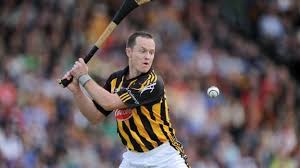
Kavanagh played his first championship match in 1998 as a defender. For the next fourteen years he would be a constant force in the Kilkenny back-line - the foundation upon which Shefflin and the other forwards could build.
His career illustrates what hurling truly is: not the flamboyant hero who storms the crowd, but the man who holds his position, neutralises his opponent, and serves his county. Every match. Every training session. Every summer. For not a single cent.
Kavanagh made his debut as a teenager with the Kilkenny minors. It is a detail that says everything: you start young, you grow with your county, and if things go well, you finish with a handful of medals and a lifetime of stories. Brother James Kavanagh carries that tradition forward - literally and figuratively.
Why this matters - What hurling teaches us
In a world that increasingly views sport as an entertainment product, hurling is a reminder of something else entirely. Of sport as an expression of identity. As a bond of community. As proof that you do not need to be paid to give everything you have.
The players of Kilkenny train just as hard as professionals. They give their evenings, their weekends, their bodies. They do this alongside their regular jobs, their families, their lives. And on the day of the final, before 82,000 people at Croke Park, they give everything. Not for a contract. Not for a bonus. For black and amber. For Kilkenny.
That is what "legend unpacking" means in hurling: when you unpack the achievements of Shefflin or Kavanagh, you find no agents, no no-trade clauses. You find a man from Ballyhale. A man from St. Lachtain's. Someone who got up early to train before going to work. Someone whose brother perhaps played too. Someone whose father perhaps played too.
The rules are strict and simple. You are born in a county, you play for that county, and if you are good enough, you write history. There is no other way. There are no shortcuts. There is only: talent, dedication, and the honour of your place on earth.
That is the legend. That is what is worth unpacking.